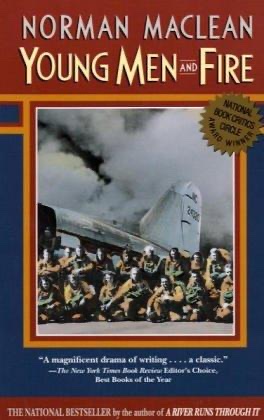
Cover of Young Men and Fire

Young Men and Fire

Norman Maclean

7 ideas

  1. Fire Outruns Men On Steep Slopes

    A grass fire moving uphill accelerates because heat rises to preheat the fuel ahead of it, so the flame front can overtake a fleeing person on a steep grade. The fatal miscalculation at Mann Gulch was that fit young men assumed they could outrun flames they had always outpaced on flatter ground.

  2. Reconstructing Catastrophe From Physical Traces

    A disaster with few survivors can be reconstructed by combining the timed physical evidence — burned watches, the locations of bodies and crosses, scorch lines — with calculations of fire spread and human running speed. Cross-referencing where each man fell against when the fire reached that spot reveals the sequence of decisions in the final minutes.

  3. Pursuing Understanding As Personal Reckoning

    An investigator can treat a factual inquiry as a way of confronting their own mortality and grief, where solving the technical puzzle of how others died becomes inseparable from making peace with death itself. The relentless drive to know exactly what happened is fueled by a refusal to let the dead remain merely statistics.

  4. The Mann Gulch fire of 1949

    On August 5, 1949, fifteen Forest Service smokejumpers parachuted onto a fire in Montana's Mann Gulch, where they were joined by a fire guard. Foreman Wagner Dodge lit an escape fire, but the crew raced it uphill through dry grass and did not follow him. Thirteen died; only Dodge and two jumpers who found a crevice in the ridge survived.

  5. The blowup as sudden phase shift

    A fire that looks routine can change almost at once into a different kind of event. Wind, slope, dry fuel and heat reinforce one another until the fire sends burning material ahead of itself and outruns people on foot. The crew's working picture of the situation stayed tuned to the old fire. That lag between a system's change of state and the people who notice it is where the deaths happened.

  6. The escape fire nobody would enter

    Dodge invented a solution on the spot: he burned a patch of grass ahead of the main fire and lay down in the ashes, so the fire would have no fuel there. His crew barely knew him, and to panicked men racing uphill, walking into a fire looked like madness. A correct solution that has never been seen before can fail in a crisis because followers can neither understand it nor trust it in the seconds available.

  7. Catastrophe becomes tragedy only through exactness

    Maclean argues that a senseless disaster can gain meaning only when it is rebuilt minute by minute and yard by yard. He walked the slope with survivors, fixed times from a melted watch, and used fire-spread science to model the final race.

Save and mark ideas in the app