Work as a search for daily meaning
Terkel's interviews reveal people seeking not just a paycheck but recognition, purpose, and a sense of mattering in what they do. The recurring theme is the hunger for meaning against routine and anonymity.
United States · 1970s
4 ideas
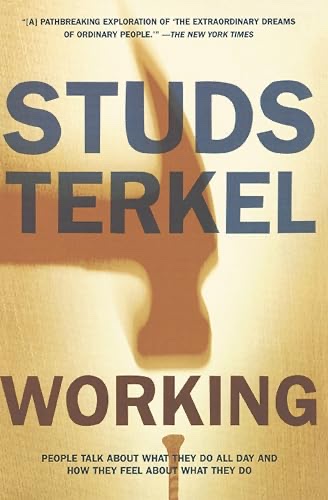
Buy on AmazonAn oral history of American working life built from interviews with scores of workers, from steelworkers to receptionists, who describe their jobs, their dignity, and the daily harm of degrading work.
Terkel's interviews reveal people seeking not just a paycheck but recognition, purpose, and a sense of mattering in what they do. The recurring theme is the hunger for meaning against routine and anonymity.
By assembling scores of first-person testimonies with minimal editorial intrusion, Terkel builds a portrait of a nation from the ground up. The method lets ordinary voices, not the author, carry the argument.
Terkel opens by naming work's daily violence, to the spirit as much as the body, in jobs that deny autonomy. Individual accounts, from steelworker to receptionist, make the abstraction concrete.
The book insists that even overlooked occupations carry pride, craft, and self-definition worth hearing. It reframes labor statistics as a chorus of specific, feeling human beings.