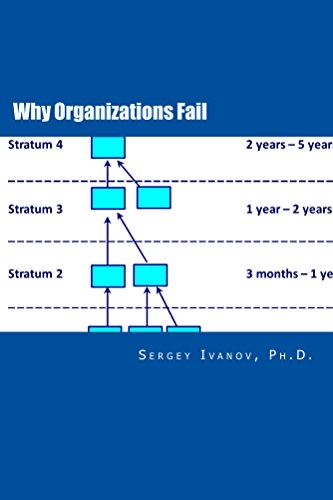
Time-span of discretion measures work level
Jaques measures the true weight of a role by the longest time before someone's judgment is checked by results. This time-span gives an objective yardstick for the level of work a job actually requires.
6 ideas
Jaques measures the true weight of a role by the longest time before someone's judgment is checked by results. This time-span gives an objective yardstick for the level of work a job actually requires.
Healthy hierarchies have a right number of layers, each a genuine step up in complexity of work. Too many or too few managerial strata produce confusion, bottlenecks, and failure.
Ivanov argues most organizational failure comes from mis-designed structure and accountability, not bad individuals. Fixing roles and reporting lines matters more than blaming or replacing people.
Each employee should have a manager one level up whose complexity of thought exceeds their own, and roles must carry felt-fair accountability and pay. Misalignment between capability and role level breeds distrust and breakdown.
People's capacity to handle complexity matures over a lifetime along measurable curves. Matching a person's current capability to a role's required level is the key to placing them well.
Against the reflex to flatten hierarchies, Jaques holds that properly designed managerial hierarchy is the most effective and fair way to organize large work. The problem is bad hierarchy, not hierarchy itself.