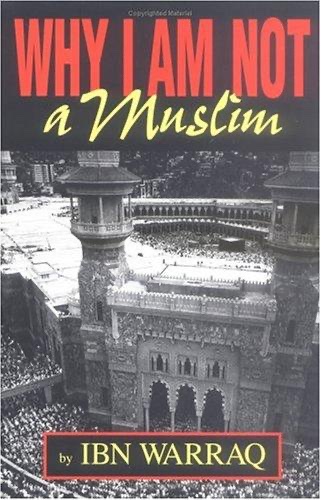
Cover of Why I Am Not a Muslim

Why I Am Not a Muslim

Ibn Warraq

6 ideas

  1. Doctrines, Not Cultures, Are Open to Critique

    A belief system can be subjected to the same rational and historical scrutiny as any other set of propositions, regardless of how many people hold it sacred. Treating a religion's truth-claims as immune from criticism out of cultural sensitivity confuses respect for persons with exemption for ideas.

  2. Source-Critical Analysis of Sacred Texts

    Apply the same historical-textual methods used on other ancient documents — examining manuscript variants, dating, redaction, and external corroboration — to scripture rather than accepting its self-description as divinely fixed. When done to the Quran, this reveals layered composition, contested chronology, and dependence on prior Jewish and Christian material.

  3. Apostasy as a Suppressed Freedom

    The right to leave a belief system is the test case for genuine freedom of conscience, because a system that punishes exit reveals it cannot retain members by persuasion alone. Where leaving a religion carries social, legal, or capital penalties, professed faith cannot be assumed to be freely chosen.

  4. Reading Doctrine Through Its Treatment of Outsiders

    Evaluate a worldview not by its stated ideals but by the legal and social status it assigns to those who reject or fall outside it — unbelievers, women, slaves, minorities. The codified rules for the marginal reveal the system's operative values more honestly than its devotional self-image.

  5. Reform Requires Confronting Foundations, Not Reinterpreting Them

    Liberal reinterpretations that strain to read tolerance into texts whose plain meaning is harsh ultimately leave the authoritative source intact and available for literalist revival. Durable reform demands openly demoting the text from infallible to historical, not euphemizing its contents.

  6. The Manufactured Golden Age

    A civilization's intellectual achievements are often retroactively credited to its dominant orthodoxy when they actually arose from inherited foreign knowledge and from freethinkers operating in tension with that orthodoxy. The 'golden age' narrative thus inverts cause and effect, crediting the constraint for what flourished despite it.

Save and mark ideas in the app