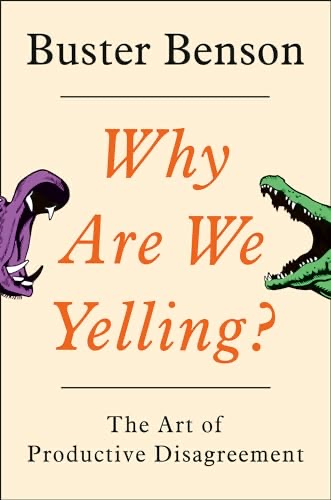
Cover of Why Are We Yelling?

Why Are We Yelling?

Buster Benson

3 ideas

  1. The Three Voices of Disagreement

    Every disagreement runs along one of three axes: the head voice asking 'What is true?', the heart voice asking 'What do I prefer?', and the hands voice asking 'What is useful?'. Most arguments stall because the two sides are actually answering different questions — one debating facts while the other defends preferences or practical stakes.

  2. Anxiety as Information, Not Threat

    The discomfort that arises during disagreement is a signal that something valuable is at stake, not a sign that something has gone wrong. Treating that anxiety as data to explore rather than danger to suppress converts conflict from a fight to win into an opportunity to learn what each party actually cares about.

  3. Honest Bias Over False Neutrality

    No one is genuinely unbiased; pretending to neutrality only hides the perspective shaping your view. Naming your biases openly — admitting where you stand and why — builds more trust and clarity than performing objectivity, because it gives the other person an accurate map of where you're actually coming from.

Save and mark ideas in the app