Most advertising spend is wasted
Drawing on large-scale studies, the authors find a large share of ad budgets produces no measurable effect. The problem is not spending too little but spending without knowing what works.
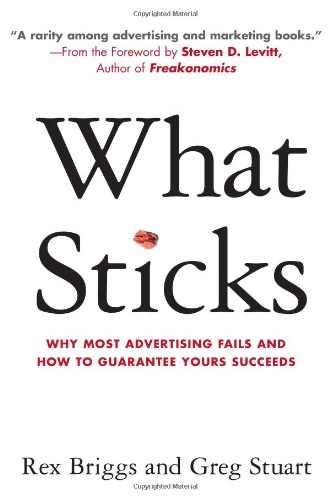
6 ideas
Drawing on large-scale studies, the authors find a large share of ad budgets produces no measurable effect. The problem is not spending too little but spending without knowing what works.
They propose isolating each channel's contribution and reallocating dollars to what moves purchase intent. Continuous measurement replaces intuition and legacy media habits.
Creative that fails to shift perception cannot be rescued by more impressions. What is said matters more than how loudly it is repeated.
The book reports on controlled studies across TV, print, and online for major advertisers. Empirical field data, not opinion, drives its conclusions about what sticks.
Better results come from shifting money among channels and messages than from raising total spend. Reallocation toward proven performers is the primary lever.
The authors reframe advertising as a testable investment with knowable returns. Treating campaigns as experiments makes waste visible and correctable.