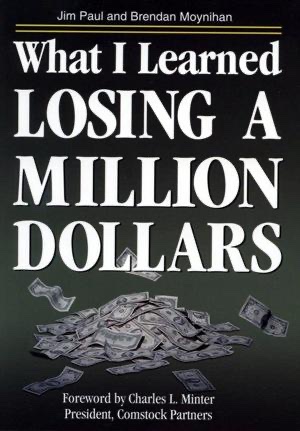
Cover of What I Learned Losing a Million Dollars

What I Learned Losing a Million Dollars

Jim Paul and Brendan Moynihan

6 ideas

  1. Study Losses, Not Wins, To Improve

    There are countless ways to make money but only a few ways to lose it, so learning what NOT to do is more reliable than studying success. Successful people often can't articulate why they won — luck and skill are indistinguishable in a single win — but losses reveal repeatable errors.

  2. Tell bets, trades, and investments apart

    Paul separates activities by structure. Betting and gambling are wagers on an outcome, and gambling is done for the thrill. Speculating and investing are held to a plan with defined exit criteria. Many people think they are investing when their behavior fits gambling, a crowd-driven activity, and seeing which category you are actually in shows whether decisions are driven by a plan or by emotion.

  3. Past success makes ruin more likely

    A streak of wins leads people to credit their own skill rather than circumstances or luck, which breeds overconfidence and a sense of invulnerability. That belief makes them take larger, less disciplined positions and ignore warning signs. The people most exposed to catastrophic loss are often those with the best recent records.

  4. The soybean oil position that ruined Paul

    Jim Paul went from a Kentucky upbringing to governor of the Chicago Mercantile Exchange. Then he held a losing soybean oil futures position, adding to it and refusing to exit as the market went against him, until he had lost his fortune, his job, and his reputation. The collapse followed a run of success that had convinced him his judgment was the reason he made money.

  5. Define your exit before you enter

    Before taking a position, set the conditions that would prove it wrong and the maximum amount you will lose. Then treat that exit as a binding rule rather than a judgment call made in the moment. Deciding in advance, while calm, keeps you from renegotiating the stop once emotions and ego are engaged.

  6. Personalizing a position turns losses into ego

    Once a trade becomes a statement about your intelligence or identity, the market price becomes a verdict on you. Admitting the loss then feels like admitting you are wrong as a person, so you hold on, rationalize, and add to the loser to avoid that humiliation. The financial loss grows because the real stakes have become psychological.

Save and mark ideas in the app