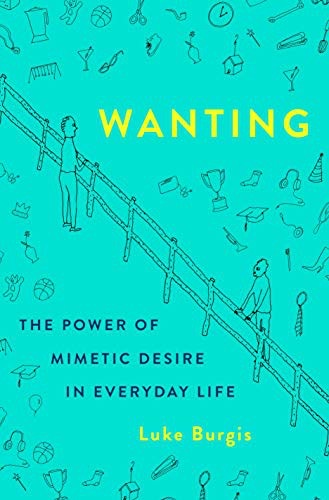
Cover of Wanting: The Power of Mimetic Desire in Everyday Life

Wanting: The Power of Mimetic Desire in Everyday Life

Luke Burgis

6 ideas

  1. Desire Is Borrowed From Models

    Beyond basic biological needs, humans do not want things spontaneously — they learn what to want by imitating the desires of other people who serve as models. Desire is therefore triangular: a subject wants an object only because a model appears to want it too, making the model the hidden source of most of our preferences.

  2. Celebristan Versus Freshmanistan Models

    Models of desire fall into two worlds: 'Celebristan,' where models are distant in status, space, or time and pose no rivalry, and 'Freshmanistan,' where models are socially close enough to compete directly with us. Conflict intensifies in Freshmanistan because proximity turns admired models into rivals fighting over the same objects.

  3. Mimetic Rivalry Escalates Toward Sameness

    When two people imitate each other's desire for the same object, each intensifies the other's wanting in a feedback loop, and the object eventually becomes secondary to the competition itself. The rivals grow more alike as they fixate on defeating each other, mistaking their growing sameness for difference.

  4. Scapegoat Mechanism Restores Order

    When mimetic rivalry spreads through a group and threatens collapse, the accumulated tension is discharged by uniting everyone against a single victim blamed for the chaos. Expelling or destroying this scapegoat temporarily restores peace, which is why the mechanism repeats and often becomes ritualized into cultural and religious forms.

  5. Thick Versus Thin Desires

    Thin desires are shallow, contagious, and mimetically driven by current models, while thick desires are deeply rooted, durable, and resistant to social fashion. Examining whether a want has survived across time and changing circumstances helps distinguish authentic motivations from imitated ones.

  6. Tony Hsieh's Zappos Happiness Pursuit

    Zappos CEO Tony Hsieh relentlessly chased models of meaning and connection — building a company culture, then a downtown community — yet his mimetic pursuit of fulfillment spiraled into isolation and addiction before his death. His trajectory illustrates how chasing externally modeled visions of happiness can leave even a successful person unmoored from durable, self-anchored desire.

Save and mark ideas in the app