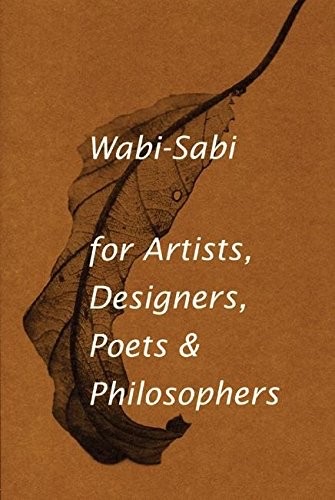
Cover of Wabi-Sabi for Artists, Designers, Poets & Philosophers

Wabi-Sabi for Artists, Designers, Poets & Philosophers

Leonard Koren

6 ideas

  1. Beauty in Impermanence, Imperfection, Incompleteness

    Wabi-sabi locates beauty specifically in things that are impermanent, imperfect, and incomplete — the opposite of the polished, monumental, and enduring ideals of classical perfection. The aesthetic responds to the marks of time, decay, and modesty rather than treating them as flaws to be corrected.

  2. All Things Trend Toward Nothingness

    Wabi-sabi treats existence as a continuum running from nothingness, into being, and back into nothingness, with objects either emerging from or returning to dissolution. The most evocative wabi-sabi objects sit near the dissolving end of this arc, visibly carrying the trace of their own decline.

  3. Greatness Hidden in Overlooked Details

    Wabi-sabi directs attention away from the grand and obvious toward the inconspicuous, small, and easily ignored — a rust stain, a crack, a faded surface. Significance is found by paring back and looking closely rather than by scaling up and adding.

  4. Material Poverty as Spiritual Richness

    Wabi-sabi reframes austerity, rusticity, and the absence of luxury not as deprivation but as a path to inner freedom and heightened sensitivity. Stripping away ornament and excess clears space for a more direct, contemplative relationship with reality.

  5. Rikyu and the Fallen Camellias

    The tea master Rikyu is said to have refined the wabi-sabi aesthetic in part by rejecting the showy and contrived — for instance, sweeping a garden clean and then shaking a tree so a few leaves fell naturally onto the swept ground. The gesture demonstrates that wabi-sabi beauty is cultivated to appear unforced and accidental rather than truly random.

  6. Pared-Down Intimacy Over Imposing Grandeur

    Wabi-sabi favors the human-scaled, earthy, and tactile — dim light, natural materials, irregular handmade forms — creating closeness rather than awe. It deliberately rejects the cool, perfect, smooth machine-made ideal in favor of textures that reveal the hand and the passage of time.

Save and mark ideas in the app