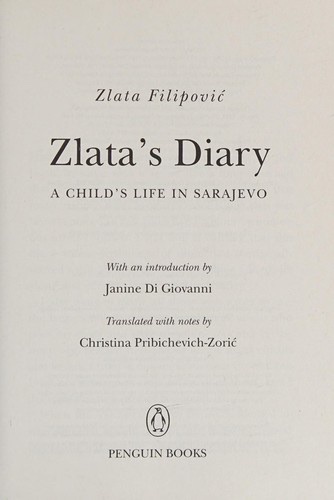
Cover of Zlata's Diary

Zlata's Diary

Zlata Filipović

4 ideas

  1. A Sarajevo schoolgirl's diary under siege

    Zlata Filipović began a diary in September 1991, at age ten turning eleven, filled with piano lessons, MTV, and birthday parties. From spring 1992 it records the siege of Sarajevo: nights in the cellar during shelling, no electricity, water, or gas, the 1992 breadline massacre on Vase Miskina Street, and the death of her friend Nina from a shell. Published with UNICEF's help in 1993, the diary gained international attention, and in December 1993 her family was evacuated to Paris.

  2. Ethnic categories arrive from outside

    Zlata writes that among her friends and family there are Serbs, Croats, and Muslims, and that she never knew or cared who was which until politics forced the labels on them. This shows ethnic identity used as a political tool, not a lived division.

  3. The shrinking world of a besieged child

    Under siege, a child's life narrows step by step: from city to street, to apartment, to the one safe room or cellar. Her days fill with fetching water, cooking on a wood stove, and waiting out shelling. Deprivation becomes routine through small losses, until boredom, fear, and chores replace school and play as the shape of the day.

  4. Personifying a diary creates a confidant

    Zlata addresses her diary as a person, 'Mimmy,' and writes to it as a friend who listens. Her real social world is being destroyed, as friends flee or die and she is kept indoors. A named listener lets her keep up the habit of confiding, turning private fear into something shared and survivable.

Save and mark ideas in the app