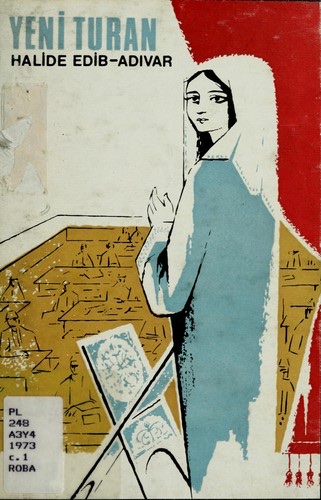
Cover of Yeni Turan

Yeni Turan

Halide Edib Adıvar

4 ideas

  1. Kaya's political marriage to save Oğuz

    Kaya, a woman teacher who has worked in Anatolian villages and become a leading public speaker for the New Turan party, loves the party's leader, Oğuz. When Oğuz's life is threatened in the conflict with the rival centralist New Ottomanist party, she agrees to marry its leader, Hamdi Pasha, as the price of Oğuz's survival. The episode makes her private life a direct instrument of party struggle, a political sacrifice rather than a romantic choice.

  2. Decentralization over imperial centralism for regeneration

    The novel argues that national renewal requires devolving administration and initiative to the provinces rather than holding a multi-ethnic empire together through a strong central authority. Its New Ottomanists defend centralized rule in the name of unity. New Turan's program holds that local self-government, rooted in a shared Turkish cultural identity, produces more loyalty and development than control imposed from the capital.

  3. Women teachers as agents of nation-building

    In the book's ideal order, educated women go out to the provinces as teachers and civic organizers, spreading literacy, hygiene and national consciousness in the villages. Women's participation is treated as working labour the new society depends on, not as a symbolic reform. The regenerated nation is built through the classroom and the village more than through the capital's institutions.

  4. Utopia as disguised present-day party manifesto

    That setting lets it present a contested current political program as a working, lived reality. Reading a utopia this way shows that its imagined future is an argument about present factions: it dramatizes which side's victory would produce a livable society.

Save and mark ideas in the app