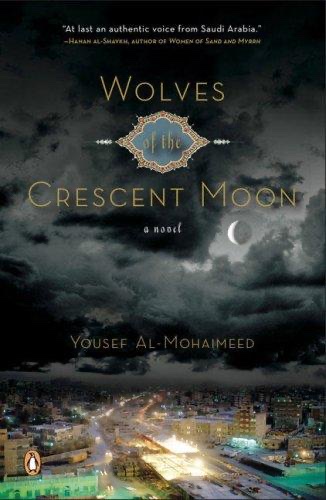
Cover of Wolves of the Crescent Moon

Wolves of the Crescent Moon

Yousef Al-Mohaimeed

4 ideas

  1. Tawfiq: kidnapped, castrated, freed, still marginal

    After Saudi Arabia formally abolishes slavery in 1962 he is legally free, yet he has no family, no children and no tribe to return to. He ends up in a low-status job, serving coffee in a government office. His case shows that legal emancipation which leaves the social wound in place produces a permanent underclass, not free citizens.

  2. Lineage as the gate to personhood

    In a society organised by tribe and patrilineal descent, a person's worth is set by who their father is, not by what they do. Seen this way, the Bedouin cut off from his tribe, the freed slave with no kin and the foundling with no father occupy the same structural position. Each lacks the one credential that turns a body into a recognised member of society.

  3. Bureaucratic files replace family for the unclaimed

    It records an assigned name, a place of discovery and the institutional steps that followed. When kinship is missing, the state's paperwork becomes the only proof of existence. This makes identity something issued and filed rather than inherited, and something that can be lost as easily as a folder left on a bus.

  4. The body as a ledger of stigma

    The novel's outcasts carry their social history in their flesh: Turad's missing ear and Tawfiq's castration. These marks are read by others before anything is said, so each man's past becomes a permanent public label he cannot explain away or outlive. The mutilation also works as a sentence in its own right: it fixes the man's place in the social order and forecloses futures such as marriage, fatherhood and respectability.

Save and mark ideas in the app