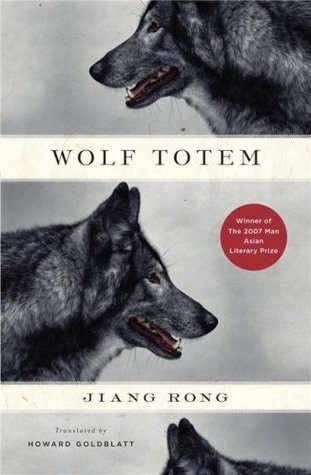
Cover of Wolf Totem

Wolf Totem

Jiang Rong

4 ideas

  1. Wolves are keystone regulators of grassland

    Old Bilgee teaches that the grassland is the 'big life' and every animal on it is a 'small life': wolves cull the gazelles, marmots, rabbits and field mice that would otherwise strip the grass and riddle the soil. When the wolves are exterminated, the grazers and burrowers multiply unchecked, overgrazing and burrowing follow, and the steppe turns to sand, taking the herders with it.

  2. The gazelle harvest and the wolf-pit raids

    In 1967 Chen Zhen, a Beijing student sent down to Olonbulag in Inner Mongolia, sees how Mongol herders leave part of a wolf pack's winter gazelle kill behind so the wolves still have food and do not turn on the flocks. Incoming Han cadres and settlers take the whole cache and then raid the dens to destroy the pups.

  3. Raising a captive wolf cub fails

    Chen Zhen takes a cub from a den and raises it chained in a pit at the camp, hoping to understand the wolf from the inside. The cub never becomes tame: it strains against its chain, will not submit, and is badly hurt when the camp moves. In the end Chen has to kill it himself, and he sees that a totem animal cannot be possessed without being destroyed.

  4. Wolf-spirit versus sheep-like national character

    The book's essayistic passages claim that farming and Confucian order made the Han Chinese docile, like sheep. They set this against nomads, who learned courage, strategy, teamwork and freedom from hunting beside wolves, and they argue that China's historical vitality came from repeated infusions of nomadic 'wolf blood'.

Save and mark ideas in the app