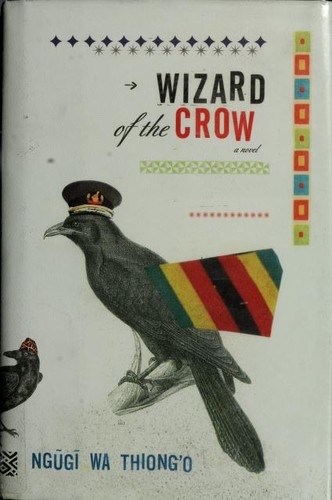
Cover of Wizard of the Crow

Wizard of the Crow

Ngũgĩ wa Thiong'o

4 ideas

  1. Ministers surgically enlarge eyes, ears, tongue

    In the fictional republic of Aburĩria, the Ruler's ministers compete for favor by altering their bodies. Machokali has his eyes enlarged to see the Ruler's enemies, Sikiokuu has his ears enlarged to hear sedition, and Big Ben Mambo has his tongue lengthened so his commands reach further. The ministers' grotesque surgeries show that under personal rule, a courtier's career depends on performing surveillance and amplification for the ruler rather than on governing.

  2. The queue as accidental political assembly

    Unemployed people lining up for scarce jobs form a queue that grows, and passers-by join it simply because it exists. The regime then reads the unexplained line as a protest. Because authoritarian power cannot tolerate any gathering it did not organize, even a wait for work becomes subversive, and the state's paranoia turns ordinary economic desperation into a movement.

  3. The diviner's mirror reflects clients' desires

    Kamĩtĩ is an unemployed graduate who becomes the 'Wizard of the Crow' by accident, after a bluffing sign scares off the police chasing him. His 'sorcery' works by holding up a mirror and letting each client read their own hidden wants and fears into it. On this view, the authority of seers, experts and oracles comes less from special knowledge than from being a surface onto which the powerful and desperate project what they already want to hear.

  4. White-ache: the illness of borrowed aspiration

    Tajirika is an elite contractor who is struck dumb, able to stammer only 'If...', and the Wizard diagnoses his condition as 'white-ache': a sickness of wishing to be white. The ailment names how the postcolonial elite measure their worth by Western standards. The Ruler's plan to borrow from the Global Bank to build 'Marching to Heaven', a tower reaching to God, is the national-scale version of the same mimicry.

Save and mark ideas in the app