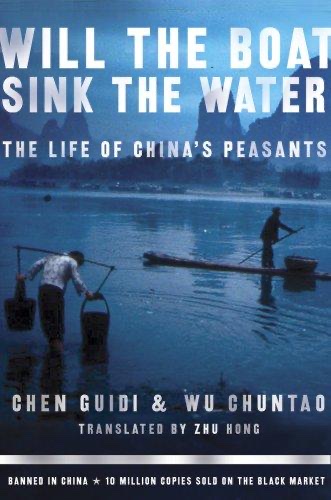
Cover of Will the Boat Sink the Water?

Will the Boat Sink the Water?

Chen Guidi & Wu Chuntao

4 ideas

  1. Ding Zuoming killed for demanding an audit

    In 1993, Ding Zuoming, a young farmer in Lixin County, Anhui, gathered villagers to demand that village cadres open the books on the fees they were collecting. He was beaten to death by local officials and police. The case shows how a request for financial transparency became a lethal threat in a system where local power ran on extraction nobody had to account for.

  2. Huang Zongxi trap of fee consolidation

    Each time rulers folded miscellaneous levies into a single simplified tax, the old fees' justification vanished into the new tax. Local officials then created fresh fees on top, leaving the total burden higher than before the reform. The authors use this historical pattern to warn that tax-for-fee reform alone would fail unless the structures that generate new fees were dismantled.

  3. Fabricated statistics become real tax burdens

    Levies on peasants were capped at a percentage of reported per-capita income. Cadres rewarded for showing growth inflated those income figures. The legal ceiling therefore rose on imaginary earnings, and the invented prosperity was collected as real money from farmers who did not have it.

  4. Burdens flow down to the powerless

    Read the peasant burden as a structural problem rather than individual cadre greed. Higher levels of government handed down mandates, quotas, and swollen payrolls without funding them. Township and village officials covered the gap by squeezing the only group below them, so the title's warning that the water can overturn the boat falls on a system that loads its costs onto its base.

Save and mark ideas in the app