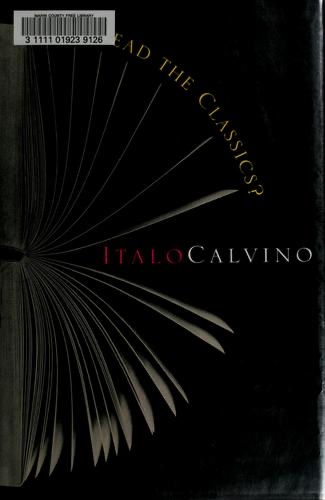
Cover of Why Read the Classics?

Why Read the Classics?

5 ideas

Buy on Amazon
  1. A classic is defined by rereading

    A classic is a book that never finishes saying what it has to say; you are never done reading it, only rereading it. The first encounter is always already a return, because its influence has reached you through the culture before you open it.

  2. The classic as unconscious background noise

    A classic persists as a trace even in those who claim not to have read it; it survives as collective memory and reference that shapes thought beneath awareness. Its enduring presence is measured less by direct reading than by its persistence as background against which later works are understood.

  3. Read classics before and against commentary

    Read the classic directly first, letting it act on you unmediated, rather than through the accumulated criticism and received opinion that cover it like dust. The commentary is useful only afterward, and only if it sends you back to the text with sharper eyes; otherwise it substitutes a reputation for an encounter.

  4. Reading the private self against public ambition

    A writer's smaller, apparently marginal or private works can reveal the governing obsessions more clearly than their monumental public projects. Attending to what an author does when not performing for posterity exposes the actual machinery of their imagination.

  5. Ovid's cosmos of continuous transformation

    Calvino reads Ovid's Metamorphoses as a world without fixed hierarchy of beings, where gods, humans, animals and plants exist on one continuous plane and any form can pass into any other. The poem's principle is that everything is connected to everything else, so no shape is final and reality is a network of potential conversions.

Save ideas and give them a thumbs up or down in the app