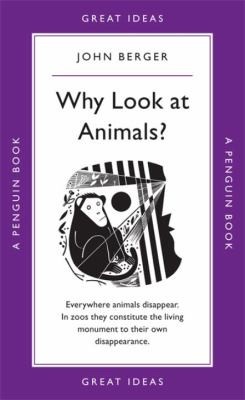
Cover of Why Look at Animals?

Why Look at Animals?

5 ideas

Buy on Amazon
  1. The look between human and animal

    The gaze exchanged between a human and an animal is distinct because the animal observes the human across an abyss of non-comprehension while being itself the object of knowledge; the animal's silence and unlikeness guarantee a kind of companionship that no human can offer. This mutual look situated the human within a world of parallel lives, confirming and yet mysterious.

  2. Animals marginalized by capitalist modernity

    Industrial capitalism broke the ancient proximity between humans and animals by converting animals into raw material (food, labor, leather) processed like any commodity, and then into spectacle or pet. This expulsion of living animals from daily life proceeded in step with their reduction to units of production and their sentimental reappearance as toys and images.

  3. Zoo animals that disappoint the visitor

    At the public zoo, visitors move from cage to cage searching for an animal that will look back, but the captive animals are listless, drugged by boredom and dependence, their reactions dulled so that the expected encounter never happens. The zoo is built as a monument to the disappearance of animals: it promises the look and structurally cannot deliver it.

  4. Animals as the first metaphor and messengers

    Animals were humanity's earliest subject for metaphor and the first material for painting; the blood and milk of the relationship made animals carriers of meaning, oracles and sacrifices that linked the visible world to the unseen. What was first about their relation with humans was that they were both like and unlike, offering companionship across difference.

  5. Pets and images as compensatory substitutes

    As real animals vanish from lived experience, they return in co-opted forms: the pet, isolated and reshaped to mirror its owner's lifestyle, and the mass-produced animal image or stuffed toy aimed at children. These substitutes mark the loss they appear to fill, so cultural saturation with animal imagery is read as a symptom of actual absence.

Save ideas and give them a thumbs up or down in the app