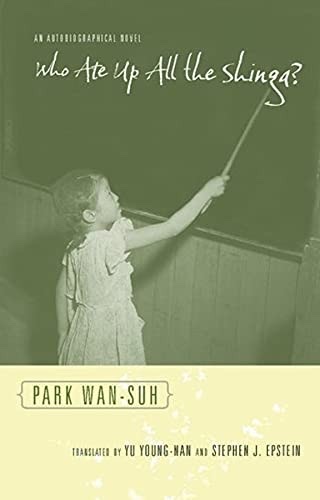
Cover of Who Ate Up All the Shinga?

Who Ate Up All the Shinga?

Park Wan-suh

4 ideas

  1. Mother uproots daughter to make her modern

    Park's widowed mother leaves the family village of Pakchok near Kaesong and takes her young daughter to a cramped rented room on the poor edge of colonial Seoul, determined to turn her into a 'new woman' through modern schooling. The mother bends the rules to enroll the girl in a better city school, while the child grieves for the wild shinga grass and open hills of the countryside. The move shows ambition for upward mobility imposing dislocation and loss on the child who carries it.

  2. A family trapped as Seoul changes hands

    During the Korean War, Park's family cannot flee Seoul largely because her brother is wounded, so they live through successive North and South Korean occupations of the city. Each change of control brings new loyalty checks, denunciations and reprisals against anyone tied to the previous regime.

  3. Alternating regimes make everyone suspect

    When territory repeatedly changes hands, any accommodation that was needed to survive one occupier becomes evidence of collaboration under the next. Civilians who stay are punished for the very choices that kept them alive. Their loyalty is judged by where they were rather than what they believed.

  4. Bearing witness as a survivor's resolve

    Standing in a Seoul emptied of its people, the young Park resolves that she will one day write down what she has seen. She treats testimony as a counter-act against forces that humiliated her family and erased ordinary lives. Memory becomes a deliberate obligation, and writing becomes a way to reclaim agency from events the witness could not control.

Save and mark ideas in the app