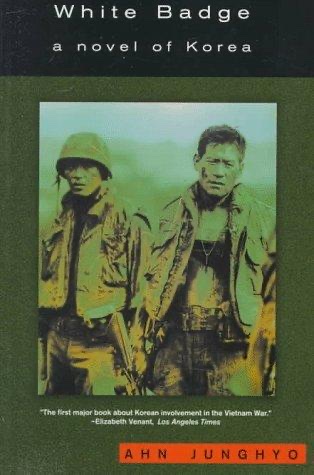
Cover of White Badge

White Badge

Ahn Junghyo

4 ideas

  1. Han Ki-ju and the shadowing veteran Pyon

    At the same time Pyon Chin-su, a former platoon mate, begins phoning and shadowing him, unable to hold a life together after the war. The two narratives interlock: as Han reconstructs his memories of the jungle, Pyon's collapse becomes the living evidence of what those memories contain, and it ends with Han shooting Pyon at Pyon's own request.

  2. Soldiers as a nation's exported commodity

    South Korea sent troops to Vietnam partly in exchange for American money and aid, which turned its young men into a paid export whose blood financed the nation's economic rise. The novel shows the soldiers understanding their own service in these terms, counting dollars and consumer goods shipped home. Once killing is framed as wage labor for another nation's war, the soldier loses any cause that could make the violence mean something, and that leaves him with guilt but no justification.

  3. Former victims reenacting the occupier's role

    Korean soldiers who grew up in the devastation of the Korean War, fought on their soil by foreign armies, now find themselves as the foreign army moving through Vietnamese villages. The peasants, burned huts and suspected guerrillas mirror their own childhood. Seeing the war this way shows how a people's historical victimhood does not protect them from becoming perpetrators. It also shows that the recognition sharpens their guilt instead of excusing it.

  4. The white badge of emptiness

    Against the idea of a 'red badge of courage,' where combat confers identity, the novel proposes a white badge: what the veteran brings home is a blank rather than honor or disgrace. The war produced no story that he can tell with pride or with confession. This emptiness is itself the wound, because a veteran without a meaningful narrative has nothing to integrate his experience into, so his memories stay loose and intrusive.

Save and mark ideas in the app