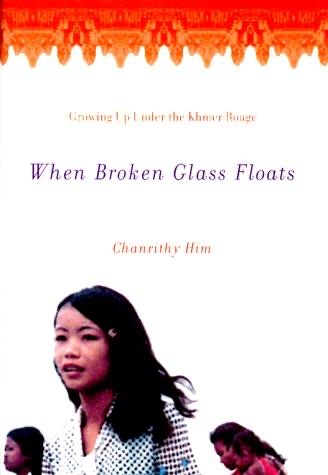
Cover of When Broken Glass Floats

When Broken Glass Floats

Chanrithy Him

4 ideas

  1. A nine-year-old through Khmer Rouge camps

    In April 1975 the Khmer Rouge emptied Cambodia's towns, and Chanrithy Him, then nine, was driven with her large, educated family into rural labour camps. Over the next four years she was separated into children's work brigades, and her father was taken away and killed.

  2. Broken glass floats: an inverted moral order

    The title comes from a Khmer saying that a world where gourds sink and broken glass floats is one turned upside down. Under such a regime, what should carry you, such as education, family standing or honesty, drags you under, while what should sink, such as ignorance, cruelty or informing, rises. Survival depends on recognising that the normal link between virtue and safety has been reversed, and on hiding the qualities that once protected you.

  3. Hunger as the regime's instrument of control

    The memoir shows starvation working as a tool of governance, not just a side effect of bad policy. Rations are set below survival level, and food is tied to labour quotas and obedience. Gathering food on your own is punished as theft from the collective. Constant hunger shrinks people's thoughts to the next meal, erodes family solidarity and makes resistance physically impossible.

  4. Replacing family loyalty with state loyalty

    The Khmer Rouge's Angkar deliberately broke up households. It moved children into separate work units and taught them that loyalty belonged to the organisation, not to parents. Seen this way, taking children from their families is not incidental cruelty but the regime's core method: it removes the private bonds through which people share food, information and grief. Survival for the separated child then depends on quietly rebuilding those bonds, such as siblings secretly sharing food.

Save and mark ideas in the app