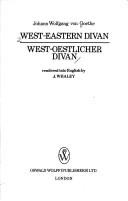
Cover of West-östlicher Divan

West-östlicher Divan

Goethe

6 ideas

  1. Hegire as flight into renewal

    The opening poem 'Hegire' borrows Muhammad's flight from Mecca to Medina as a model for poetic renewal: the aging poet escapes a Europe of collapsing thrones and wars by imaginatively migrating to a patriarchal East. There he seeks the 'source' of speech, faith, and song. The flight is presented as a return to origins rather than an escape into exotic novelty, and deliberate displacement becomes a means of rejuvenation.

  2. Stirb und werde: death as transformation

    In 'Selige Sehnsucht' the moth that flies into the flame and is consumed becomes an emblem of the soul's longing for a higher union. The poem closes with the command 'stirb und werde' (die and become): whoever does not grasp this remains 'only a dreary guest on the dark earth.' Self-dissolution is framed as the necessary price of transformation rather than as loss.

  3. Poet-to-poet rivalry as twinship

    Goethe addresses Hafez not as a source to imitate but as a 'twin' whom he vows to rival, declaring that competing with him is his joy and his life. Influence is recast as a living dialogue between equals across centuries. Borrowing openly from a foreign master can therefore expand one's own voice rather than diminish its originality.

  4. Orient and Occident as inseparable

    The collection asserts that 'God's is the Orient, God's is the Occident,' and that the lands of North and South rest in peace in His hands. East and West are treated as complementary halves of one human inheritance rather than opposed civilizations. This lens reframes cultural difference as a resource for self-understanding instead of a boundary.

  5. Hatem and Suleika's dialogic love

    In the 'Book of Suleika' the poet adopts the mask of Hatem and exchanges love poems with Suleika, some of which were actually written by Marianne von Willemer and silently included. Love appears as a call-and-response between two voices, with the aging lover renewed by the beloved's reply. The poems suggest that love's highest expression is mutual authorship rather than one-sided praise.

  6. Wine as licensed spiritual intoxication

    The 'Book of the Cupbearer' treats wine, following the Persian convention, as a double sign: literal pleasure and a figure for divine rapture that frees the mind from dry orthodoxy. Drunkenness becomes a way of speaking about ecstasy and insight that sober doctrine forbids. Sensual and sacred experience are read as continuous rather than opposed.

Save and mark ideas in the app