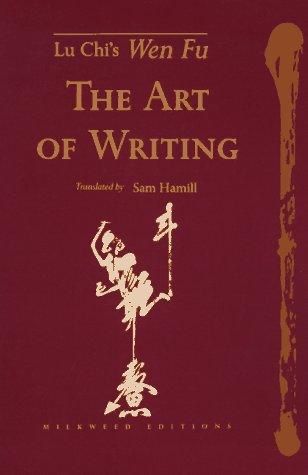
Cover of Wen Fu

Wen Fu

Lu Ji

5 ideas

  1. Idea must fit thing, words must fit idea

    The writer's core anxiety is a double gap: the conception may fail to match its object, and the words may fail to capture the conception. Knowing how to write is not the hard part; the hard part is carrying it out, so craft means closing both gaps at once and not just polishing language.

  2. Preparation through stillness and reading

    Composition begins before writing. The writer stands at the center of things in dark contemplation and nourishes feeling by reading the classics. The writer is moved by the passing seasons, grieving over falling leaves in autumn and rejoicing at tender branches in spring, so inner receptivity and absorbed tradition together create the conditions for words to come.

  3. Inspiration arrives and departs uncontrollably

    The flow of thought comes like a sudden wind and leaves like an echo that dies away. It cannot be summoned or stopped by will. When the impulse is present, words flow abundantly; when it is blocked, the writer is as dry as a withered tree, and even the author cannot explain why the channels open or close.

  4. Each genre has a distinct governing quality

    Different forms demand different virtues. Shi poetry traces emotion and is delicately ornate, while fu rhapsody describes things and is clear and bright. Stele inscriptions balance ornament with substance, dirges are lingering and mournful, and argument is precise and persuasive. Mastery means matching the manner to the form's purpose, not applying one style everywhere.

  5. The riding crop phrase that animates

    A single well-placed key phrase at a crucial point can energize an entire piece, the way a crop drives a horse forward. Other lines may be serviceable, but this pivotal expression concentrates meaning and gives the whole its force, so revision should find or create that focal point.

Save and mark ideas in the app