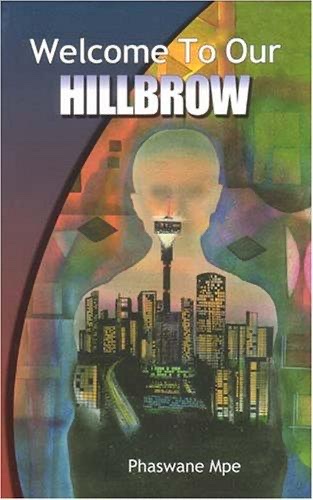
Cover of Welcome to Our Hillbrow

Welcome to Our Hillbrow

Phaswane Mpe

4 ideas

  1. Refentše's suicide and his mother's witch-burning

    Refentše leaves the village of Tiragalong for Hillbrow and university. He discovers his girlfriend Lerato has slept with his friend and jumps to his death from a Hillbrow balcony. Back home, gossip rules that his mother must have bewitched him, and villagers burn her alive, so a private urban despair becomes a rural lynching through rumor.

  2. Refilwe becomes the foreigner she blamed

    Refilwe, Refentše's former girlfriend, spreads Tiragalong's stories that makwerekwere, African immigrants, bring AIDS and crime to Hillbrow. She then goes to Oxford, learns she is HIV-positive, and experiences being the unwanted African foreigner herself. She returns home to die, and her own village reads her illness the same way it read the immigrants.

  3. Blame-narratives displace disease onto convenient outsiders

    Communities facing AIDS protect themselves from shame by assigning its source to an outsider category, such as foreign Africans, witches, or promiscuous city dwellers. The story circulates through gossip faster than medical fact. Because the outsider category is elastic, anyone, including the accuser, can be reassigned into it once they fall ill or leave.

  4. Village and city as one continuous moral network

    The novel treats Hillbrow and Tiragalong not as opposite worlds but as nodes connected by migrants, phone calls, and gossip. Events in the city are judged by village logic, and village prejudices are carried into the city. Reading it this way shows that urbanization spreads rural moral frameworks rather than escaping them, and that everyone is a citizen of 'our Hillbrow, our Tiragalong' at once.

Save and mark ideas in the app