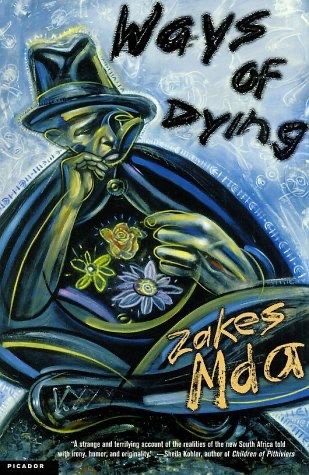
Cover of Ways of Dying

Ways of Dying

Zakes Mda

4 ideas

  1. Toloki invents the profession of mourning

    Toloki, a poor migrant from the countryside, gives himself a job the city has never had: professional mourner. He attends strangers' funerals in a self-designed costume of black tights, cape and top hat, and performs grief with ritual groans. He keeps an ascetic diet of Swiss rolls and green onions and asks families for a fee, turning death, the city's most abundant product, into dignified work for a man with no other place in the economy.

  2. A child killed by his own side

    Noria's young son Vutha is necklaced (burned to death with a petrol-filled tyre) by youth comrades of the liberation movement. They suspect him of betraying their plans to a rival group. The public funeral is meant to honour a martyr, but its content exposes violence produced inside the struggle itself. The novel uses this death to refuse a moral story in which all township killing flows from the apartheid state alone.

  3. The communal 'we' as narrator

    The story is told by a collective 'we', the voice of the village and settlement community. This moves authority from the lone author to the group's gossip and shared memory. The reader has to see knowledge, identity and truth as things held communally rather than privately.

  4. Imagination as survival amid squalor

    Toloki and Noria cover the walls of their shack with pictures of luxurious houses and gardens cut from glossy magazines. They 'live' in these rooms together, and Toloki begins drawing, taking up the artistic impulse of his father Jwara, a blacksmith who made figurines. Making beauty and play inside destitution is presented as a real way to stay human, not as escapism: it restores agency and joy that material conditions deny.

Save and mark ideas in the app