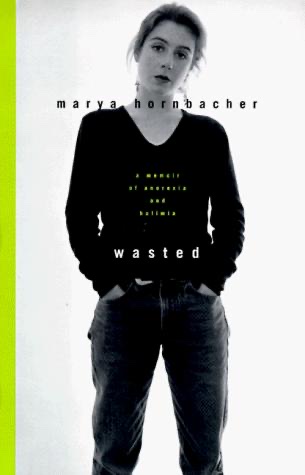
Cover of Wasted

Wasted

Marya Hornbacher

4 ideas

  1. Nine-year-old onset to near-fatal collapse

    Marya Hornbacher began bingeing and purging at about nine, restricted severely through adolescence in Minnesota and at a Michigan arts boarding school, and cycled through repeated hospitalisations and relapses. At around nineteen, after a collapse, she was told she might not survive, and she wrote the memoir in her early twenties while still unsure she was recovered. Her case shows an eating disorder as a long, relapsing course that can reach lethal severity in a bright, articulate, outwardly functioning young person, not a brief phase that resolves on its own.

  2. Starvation as a coherent language of distress

    The memoir argues that an eating disorder is not vanity or a diet gone too far. It is a logically coherent, though deadly, strategy: controlling the body stands in for the control, safety, and self-definition a person cannot get elsewhere. Cultural ideals of thinness and female smallness supply the vocabulary, but family chaos, perfectionism, and emptiness supply the motive. Treating only the eating misses what the behaviour is doing for the person.

  3. Treatment settings that breed illness competition

    Hornbacher shows how grouping severely ill patients together can create a hierarchy in which being the sickest earns status and becomes an identity. In that setting patients compare themselves with one another and reinforce the disorder instead of dismantling it. The risk comes from the social structure of a treatment environment, not only from the individual. Programs that ignore peer dynamics can end up sustaining the pathology they aim to cure.

  4. Recovery as unfinished daily choice

    The book refuses a tidy redemption arc and ends with the author still ambivalent and not declaring herself cured. Through this lens, recovery from a chronic compulsive illness is an ongoing, repeated decision made against a persistent pull, not a single turning point. Narratives and treatment models that promise a clean ending can make ordinary relapse feel like total failure.

Save and mark ideas in the app