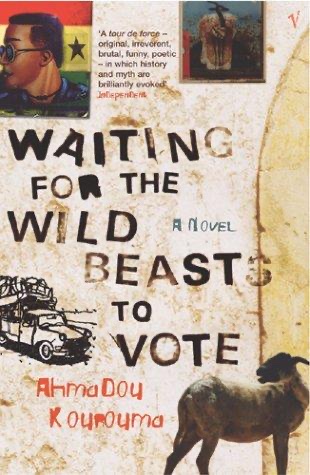
Cover of Waiting for the Wild Beasts to Vote

Waiting for the Wild Beasts to Vote

Ahmadou Kourouma

4 ideas

  1. Koyaga's Rise from Hunter to President

    Koyaga is a hunter from a 'naked' mountain tribe of the fictional République du Golfe. He fights as a French colonial infantryman in Indochina and Algeria, comes home to find veterans shut out, and leads a coup that murders the president Fricassa Santos, a figure modeled on Sylvanus Olympio, who was killed in Togo's 1963 coup. His dead enemy is mutilated in the manner of a hunter treating his game, and Koyaga then rules for decades through terror, sorcery and foreign patronage, a composite of Gnassingbé Eyadéma's actual career.

  2. The Dictator's Apprenticeship Tour

    After seizing power, Koyaga visits a circuit of established autocrats, thinly veiled versions of Houphouët-Boigny, Bokassa, Mobutu and Hassan II. Each teaches him a technique of survival, such as trusting no one, moving the nation's wealth into private foreign accounts, and exploiting the Cold War to win Western backing. The novel presents tyranny as a transmissible craft, learned from peers and passed along a network rather than invented by each tyrant alone.

  3. Praise-Song Turned into Indictment

    The whole novel is a donsomana, a Malinké hunters' epic recited by the griot Bingo over six evenings. Bingo praises Koyaga's massacres with the same honorific language used for great hunts, while his crude assistant Tiécoura, the cordoua, keeps interrupting with insults and obscene truths. Holding the official glorifying genre and its mocking counter-voice side by side lets the praise itself expose the atrocity it celebrates.

  4. Anticommunism as License for Atrocity

    The novel argues that Cold War Western powers, France above all, sustained African strongmen because they declared themselves anticommunist. Once a ruler held that label, foreign aid and military protection kept flowing regardless of how many he murdered or how much he stole.

Save and mark ideas in the app