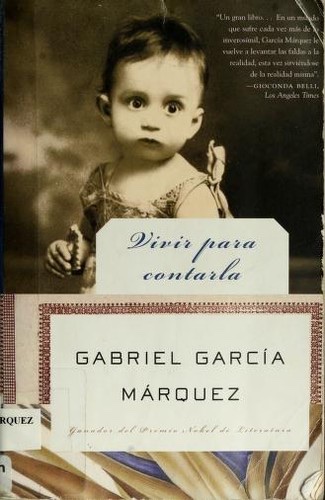
Cover of Vivir para contarla

Vivir para contarla

Gabriel García Márquez

4 ideas

  1. Returning with his mother to sell the house

    In 1950, at twenty-two, García Márquez was a law-school dropout living as a penniless journalist in Barranquilla when his mother arrived and asked him to go with her to Aracataca to sell his grandparents' house. The town he found was silent, decayed and heat-struck, the opposite of the one he remembered, and the first line of the memoir, his mother's request, is framed as the moment that pointed him toward his vocation. The trip, including passing a banana plantation named Macondo, gave him the material and the mood of his first novel and eventually of One Hundred Years of Solitude.

  2. Life as what is remembered and retold

    The memoir's epigraph says that life is not what one lived, but what one remembers and how one remembers it in order to tell it. Autobiography is treated as a narrative reconstruction shaped by the act of telling, not a factual record of events. Read this way, the author's selective, novelistic memory is the subject of the book itself, not a flaw in its accuracy.

  3. Deadpan telling of the impossible

    His grandmother told ghost stories, omens and prodigies in a completely unflustered, matter-of-fact voice, as if they were ordinary news. García Márquez credits this imperturbable tone as the key to his fiction: extraordinary events become believable when the narrator shows no surprise at them. The method lies in the teller's certainty and composure, not in the strangeness of the content.

  4. Fiction's numbers can overwrite historical record

    The death toll of the 1928 massacre of banana-company strikers near Ciénaga was never established; accounts ranged from a handful of dead to many more. García Márquez says he chose the figure of three thousand for One Hundred Years of Solitude, and afterward it was repeated in public discussion as though it were documented fact. Where the historical record is empty, a vivid literary version can fill the gap and harden into accepted history.

Save and mark ideas in the app