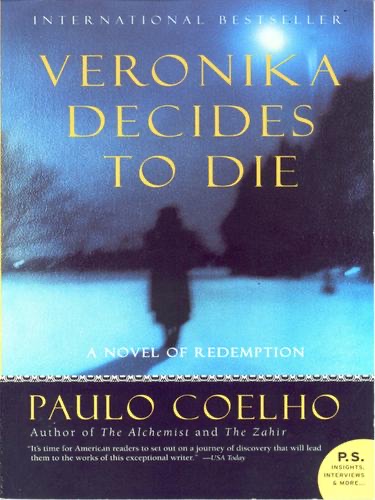
Cover of Veronika Decide Morrer

Veronika Decide Morrer

Paulo Coelho

4 ideas

  1. The Lie That Cured Veronika

    Veronika, 24, overdoses on sleeping pills in Ljubljana. She has no great tragedy; her life is simply monotonous and she believes she cannot change it. At the Villete asylum, Dr. Igor tells her the overdose has damaged her heart and she has days to live, and in that condition she begins to play piano, desire, rage, and love a schizophrenic painter named Eduard. It is later revealed that her heart was never damaged: Igor lied deliberately to test whether awareness of imminent death would restore a will to live.

  2. Vitriol: Bitterness as Slow Poison

    Dr. Igor names a hypothetical toxin, Vitriol, which accumulates in people who suppress desire and live by routine and fear of others' judgment. It is the residue of every wish a person refuses and every day lived on autopilot, and it slowly kills the capacity to feel. The proposed antidote is not comfort but a sharp confrontation with the finitude of time, which makes postponement impossible.

  3. Sanity as Shared Madness

    In the novel's parable, a sorcerer poisons a kingdom's well and everyone who drinks from it goes mad. Seen through this lens, 'normal' means conformity to whatever the majority has absorbed, and deviance is judged against that shared distortion rather than against health.

  4. Madness Licenses the Unlived Self

    Once someone is labeled insane, they are released from the social obligation to behave, perform, and meet expectations. That freedom can let them do what they suppressed while 'sane.' Examples in the novel include Veronika's public rage and sexuality, Eduard's painting of visions instead of the diplomatic career his parents wanted for him, and Mari's recovery from panic. The same freedom can also become a trap: the Brotherhood, a group of patients who have already been cured, stays in Villete because the asylum spares them the risk of living outside it.

Save and mark ideas in the app