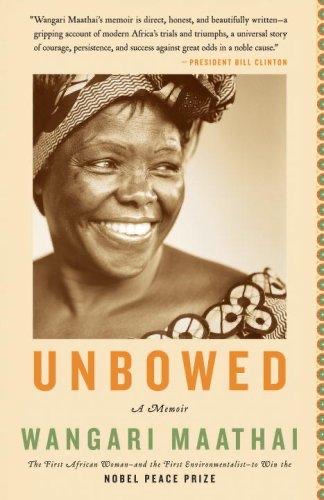
Cover of Unbowed

Unbowed

Wangari Maathai

4 ideas

  1. Uhuru Park skyscraper halted by protest

    In 1989 Moi's ruling party planned a 60-storey Kenya Times Media Trust complex in Uhuru Park, Nairobi's main public green space. Maathai wrote letters and went to the courts and the press, and Parliament ridiculed her as a divorcee who should not lecture men. The resulting publicity scared off foreign investors, the project collapsed, and a lone woman had defeated the president on a public-land question.

  2. Tree planting as entry to politics

    Rural women's problems, such as scarce firewood, dirty water and poor nutrition, were traced back to deforestation, so planting trees addressed a felt need. Women were paid a small sum for each seedling that survived, which made the work self-verifying and economically meaningful. The nurseries then became venues for civic seminars asking why the land had degraded, which turned a harmless-looking task into political consciousness the state struggled to forbid.

  3. The three-legged stool of stability

    A society stands on three legs: democratic space, sustainable and fair management of natural resources, and peace. If any one leg is missing, the stool topples, because competition over dwindling resources under unaccountable rule produces conflict. Environmental work is therefore inseparable from human rights and peace work.

  4. Cultural taboos as ecological protection

    In Maathai's childhood, the Kikuyu held the mugumo fig tree sacred and would not cut it. Its roots held soil and fed the stream where she played among frog eggs. When Christian conversion and colonial cash-cropping discredited the taboos as superstition, the trees were cut and the streams dried. Read this way, traditional beliefs can encode environmental knowledge, and dismissing them removes safeguards nobody realized were functional.

Save and mark ideas in the app