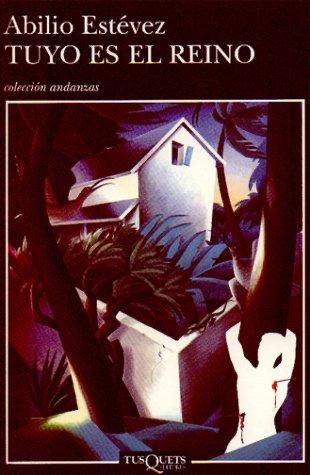
Cover of Tuyo es el reino

Tuyo es el reino

Abilio Estévez

4 ideas

  1. La Isla: tenants waiting out 1958

    On the edge of Havana, a run-down house and overgrown garden called La Isla shelters a group of tenants and neighbors through 1958, the last year before the Revolution, among them the young Sebastián, the aspiring singer Casta Diva, the beautiful youth Vido, and Uncle Rolo. The book records their desires, rituals, rumors and dead as the year runs down, and ends with the enclosed world coming apart on the eve of 1959. It is a concrete case of a small community living through the final months of an old order without knowing exactly what is ending.

  2. Enclosed garden as a national microcosm

    A walled, overgrown property works as a scale model of a country. Its isolation, its decay, its mix of residents and its sense of being cut off from the mainland reproduce the conditions of the island nation. Naming the house 'the Island' makes each private event readable as a public, national one without any political speech.

  3. History arrives as rumor, not event

    Look at a revolutionary year from inside a household and the great political events barely appear. They show up as distant noise, rumor and a vague dread. What fills the days is desire, gossip, bodily longing and dealings with the dead. This shows how ordinary people actually experience a historical turning point: indirectly, and only after the fact.

  4. Imagination is the confined person's only sovereignty

    When people are trapped by poverty, repression and a closed place, they build their real lives in fantasy, performance, erotic reverie and talk with ghosts. That inner kingdom is the only territory they fully rule, which is why the title turns the prayer's 'thine is the kingdom' toward them. Because it exists only in the mind, it survives the loss of the physical place, and only memory and writing can preserve it.

Save and mark ideas in the app