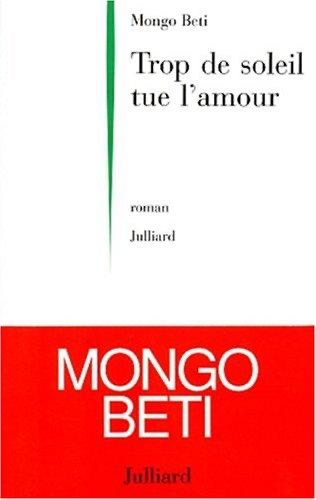
Cover of Trop de soleil tue l'amour

Trop de soleil tue l'amour

Mongo Beti

4 ideas

  1. A journalist's stolen records and corpse

    Zam, a political journalist in Yaoundé who loves jazz, finds his prized records stolen and later a corpse in his flat. Instead of a clean inquiry, the case scatters into rumour, bumbling officials and improvised amateur sleuthing. The episode shows what a crime becomes in a state where no institution can be trusted to establish what happened.

  2. Unsolvable mysteries expose an illegible state

    Classic detective fiction assumes an order that investigation can restore: the truth is findable and the guilty get named. When police, courts and officials are corrupt or indifferent, that assumption fails, and the detective plot turns into farce. Whether a mystery can be solved at all becomes a measure of whether the state is legible.

  3. Intimidation through deniable ambiguous incidents

    Pressure arrives as ambiguous misfortunes such as burglaries, strange deaths and bureaucratic snags, which could be political or could be ordinary chaos. The target cannot prove persecution, cannot rule it out, and loses the ability to act with confidence.

  4. Farce denies a regime tragic dignity

    Treating a corrupt regime as tragedy grants it a certain gravity and power. Rendering its officials and procedures as ridiculous and chaotic strips that dignity away. It also reaches readers who would not open a solemn political tract. Comic, fast-moving satire can therefore be a sharper weapon than earnest denunciation against a government whose absurdity outstrips its menace.

Save and mark ideas in the app