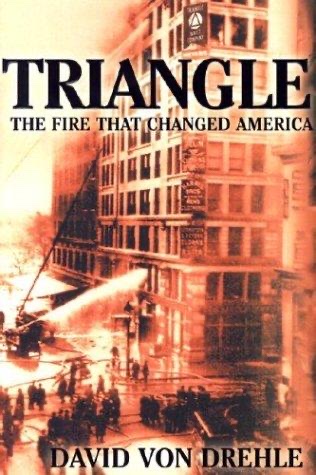
Cover of Triangle

Triangle

David Von Drehle

4 ideas

  1. The Triangle Shirtwaist Factory fire, 1911

    On March 25, 1911, fire broke out on the eighth floor of the Asch Building near Washington Square, where the Triangle Waist Company occupied floors eight through ten. On the ninth floor the Washington Place stairway door was locked, the single fire escape collapsed, and fire department ladders reached only to the sixth floor. In under twenty minutes 146 garment workers died, most of them young Jewish and Italian immigrant women, and dozens jumped to their deaths in front of crowds on the street below.

  2. Criminal law's knowledge requirement shields owners

    Owners Max Blanck and Isaac Harris were tried for manslaughter and acquitted in December 1911 because the law required proof that they personally knew the door was locked at the moment of the fire. Defense attorney Max Steuer undermined the key survivor witness, Kate Alterman, by having her repeat her account in nearly identical words, which suggested it had been rehearsed. When a legal standard demands proof of an individual's specific knowledge, a harm built into how a system operates can produce no guilty party, and later civil suits were settled for about $75 per victim.

  3. Safety measures rejected in a failed strike

    Triangle settled on wages and hours but refused to recognize the union, so the workers had no ongoing power to enforce safety. The owners kept doors locked to control workers, check them for theft, and keep union organizers out, which turned a management tool for control into a death trap.

  4. Political machines reform when constituents' survival demands it

    Tammany Hall, the corrupt Democratic machine led by Charles F. Murphy, responded to the fire by backing the Factory Investigating Commission, led by Al Smith and Robert F. Wagner, with Frances Perkins among the investigators. Because the machine's power rested on immigrant working-class votes, it had a practical reason to turn their grief into dozens of fire, sanitation, and labor laws. That transformation of machine politics into progressive legislation carried directly through Perkins, Wagner, and Smith into the New Deal.

Save and mark ideas in the app