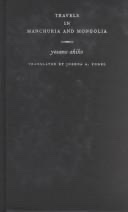
Cover of Travels in Manchuria and Mongolia

Travels in Manchuria and Mongolia

Yosano Akiko

4 ideas

  1. Touring Manchuria as Zhang Zuolin Dies

    In spring 1928 Yosano Akiko and her husband Tekkan toured Manchuria and Inner Mongolia for about forty days as guests of the South Manchuria Railway. During the trip the Kwantung Army blew up warlord Zhang Zuolin's train near Mukden. Her travelogue records the disruption and tension around them but does not register the event as Japanese military aggression.

  2. Hospitality as Curated Perception

    When the colonial enterprise pays for the trip, it also sets the itinerary, the guides, the transport, and the showcase sites: ports, railways, coal mines, steelworks, hotels. The guest's observations are honest, but they are drawn from a pre-selected sample, so the resulting account shows development and order and leaves out coercion. Sponsorship shapes testimony less through censorship than by controlling where the witness stands.

  3. Personal Pacifism Yields to National Pride

    Akiko had famously written the anti-war poem 'Thou Shalt Not Die' (1904) to her brother serving at Port Arthur. Visiting that same battlefield decades later as a guest of empire, she frames its memorials in a register closer to national commemoration than protest. Opposition grounded in grief for one's own kin can coexist with, and fade into, pride in the national project that the sacrifice secured.

  4. Aesthetic Gaze Converts Colonies into Scenery

    A poet trained in classical landscape conventions and Chinese literary allusion tends to read foreign land as a sequence of evocative views and historical echoes. Through that frame, Chinese laborers, poverty, and dispossession appear as texture within a picturesque scene rather than as consequences of the system hosting the viewer. Refined sensibility can therefore deepen political blindness, because beauty gives the eye something to rest on besides injustice.

Save and mark ideas in the app