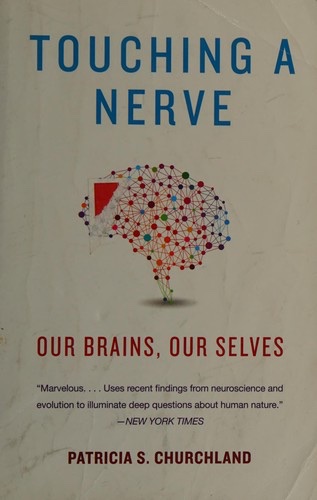
Cover of Touching a Nerve

Touching a Nerve

Patricia Churchland

6 ideas

  1. Morality grows from mammalian caring circuitry

    Moral behavior originates in the neural machinery that evolved for mothers to care for offspring, which in mammals was extended to mates, kin, and allies. Oxytocin and vasopressin systems make others' well-being feel rewarding and their distress feel painful, so social values are built on this felt attachment rather than derived from pure reason or divine command.

  2. Free will as degrees of self-control

    Free will is better understood as a matter of degree, depending on how well the brain can regulate impulses, weigh options, and defer gratification. It is not a yes-or-no question of whether choices escape causation. On this view responsibility tracks the health and development of prefrontal control circuits, which can be stronger or weaker, damaged or trained.

  3. Neural self does not diminish meaning

    Learning that the self, love, and values are brain processes does not make them less real or less valuable, just as knowing that water is H2O does not make it less wet. Fear of neuroscience rests on assuming that explanation eliminates what it explains. Reduction here is identification, not dismissal.

  4. The self as brain-constructed model

    The sense of being a unified self is a representation the brain builds by integrating body states, memory, and a model of oneself as an agent in the world. Because it is constructed, it can come apart in specific ways under brain damage, anesthesia, or disease, and those failures reveal its component parts.

  5. Lesion cases reveal the mind's parts

    Cases where localized brain damage changes personality, moral judgment, or self-recognition show that capacities once attributed to an immaterial soul depend on particular neural structures. If injury to a region reliably removes a mental function, the function is implemented there, which makes a separate soul explanatorily idle.

  6. No afterlife follows from brain dependence

    Since memory, personality, and awareness all depend on a functioning brain, nothing of the person plausibly continues once the brain dies. Accepting this can be steadying rather than bleak, because it redirects meaning toward caring for others and toward the life actually being lived.

Save and mark ideas in the app