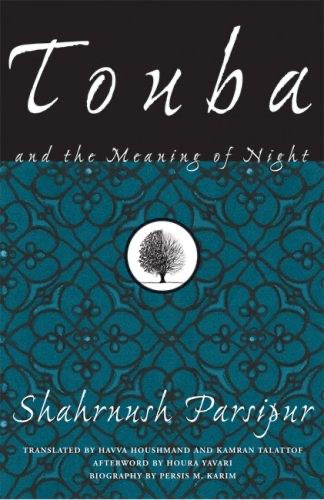
Cover of Touba and the Meaning of Night

Touba and the Meaning of Night

Shahrnush Parsipur

4 ideas

  1. Touba proposes to her elderly relative

    After her scholarly father dies, fourteen-year-old Touba secures her household by proposing marriage to Haji Mahmud, a much older relative. The match fails, and she later marries a Qajar prince who eventually takes another wife and leaves her. Her private life of marriages, abandonment and single motherhood unfolds alongside Iran's journey from Qajar rule to the Islamic Republic, so one woman's biography is set beside eighty years of national history.

  2. The murdered girl under the pomegranate

    A young girl is violated and killed, and her body is buried under a pomegranate tree in Touba's garden. The household then lives on top of the concealed crime for decades. The buried body works as the novel's figure for violence against women: it is hidden inside the home, known and unspoken, and it keeps shaping the lives that grow over it.

  3. Regimes change, women's confinement persists

    The novel stages revolutions, coups, forced modernization and religious restoration as events that reach Touba mostly as rumor, decree or intrusion into the house. Each new order claims to remake society, yet the woman at the center stays bound to the domestic interior and to men's decisions. The political surface churns while the structure of women's subordination carries over from one regime to the next.

  4. Cyclical time through magical realism

    Parsipur blends realist history with ageless figures, spirits and repetitions that return across generations. This makes Iranian time read as circular rather than progressive. Touba's lifelong search for God and meaning, pursued through spiritual guides and patient domestic labor, becomes a way of looking for truth beneath the linear story of modernization the state tells.

Save and mark ideas in the app