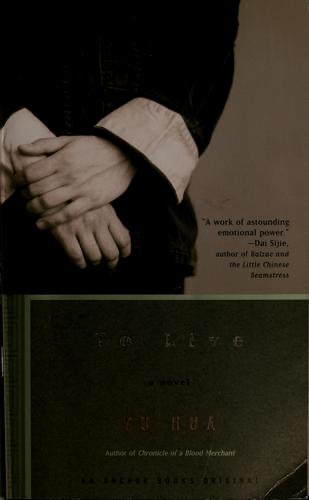
Cover of To Live

To Live

Yu Hua

4 ideas

  1. Fugui Outlives Every Member of His Family

    Over the next decades his son Youqing dies after hospital staff drain too much of his blood for the county head's wife, Fengxia dies of hemorrhage after childbirth during the Cultural Revolution, his wife Jiazhen dies of chronic illness, and his son-in-law is crushed by concrete slabs. His orphaned grandson Kugen then dies from gorging on boiled beans after long hunger, leaving Fugui alone in old age with an old ox he also names Fugui.

  2. Ruin as Accidental Protection From History

    Fugui loses his land to the gambler Long Er, and under land reform Long Er is executed as a landlord while the now-penniless Fugui is classified as a poor peasant and spared. The mechanism is that when political categories are assigned retroactively by current property, yesterday's disaster can become today's immunity. As a result, no one can judge the value of a misfortune at the moment it happens.

  3. Living Is Justified by Nothing Beyond Itself

    The novel claims that a person lives for the sake of living itself, not for achievement, family continuity, or ideology. Fugui loses every external reason to go on, yet he still continues, plowing and talking to his ox. Endurance is presented as the meaning rather than a means to one, and his survival is neither triumph nor defeat.

  4. History Registered Only Through Household Casualties

    National campaigns like the civil war, land reform, the Great Leap Forward, and the Cultural Revolution appear only through their side effects on one family. Told in a flat, unresentful first-person voice to a wandering folk-song collector, the book shows how ordinary people experience grand politics as a sequence of private, unexplained losses.

Save and mark ideas in the app