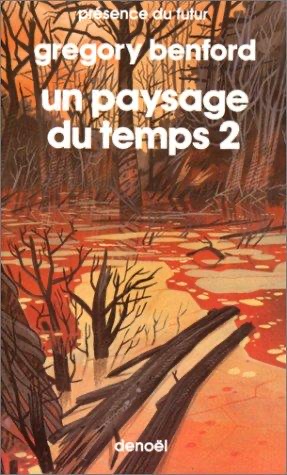
Cover of Timescape

Timescape

Gregory Benford

4 ideas

  1. Tachyon warnings mistaken for lab noise

    In 1998 Cambridge physicist John Renfrew, backed by an official named Ian Peterson, fires coded tachyon pulses backward in time to warn 1962 about the chemical cause of a spreading ecological collapse. In La Jolla, Gordon Bernstein notices unexplained interference in his nuclear-resonance experiment on indium antimonide and slowly realizes it is a message in Morse code. The warning crosses time but must then pass through colleagues, the press, and Bernstein's own reputation before anyone can act on it.

  2. Anomalies get filtered out as experimental error

    A genuinely new signal first shows up as dirt in the data, and the working reflex of experimental science is to explain it away as contamination, bad equipment, or sloppy technique. Whoever takes the anomaly seriously risks colleagues' ridicule, loss of funding, and distortion by the press. So discoveries are held back less by the evidence itself than by the career costs of believing it early.

  3. Changing the past forks the timeline

    The novel resolves the paradox of sending information backward by having a received message split history into a new branch instead of rewriting the old one. The receivers' future can be saved, but the senders stay in the ruined world that made the message necessary. Intervening in the past becomes an act of altruism toward people the actors will never meet or benefit from.

  4. Science as grinding institutional labor

    The novel portrays research as endless calibration, broken apparatus, grant politics, departmental rivalries, and fights over credit, not as a string of eureka moments. Seen this way, a scientific result is the fragile product of a social machine: funding bodies, senior skeptics, and personal ambition decide which findings survive long enough to count.

Save and mark ideas in the app