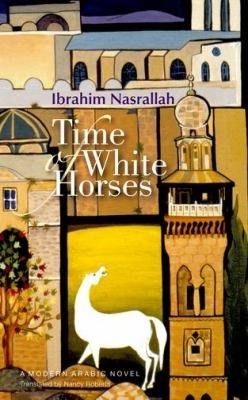
Cover of Time of White Horses

Time of White Horses

Ibrahim Nasrallah

3 ideas

  1. Khaled, the white mare, and Hadiya

    In the Palestinian village of Hadiya, a white mare named Hamama arrives and binds herself to Khaled, son of Hajj Mahmoud. Khaled grows into a defiant, almost legendary protector of the village under Ottoman and then British rule, and the mare becomes the village's shared symbol of honor. Across three generations the family and village lose land, lives, and finally the village itself in 1948, so the mare's line comes to stand for what was destroyed.

  2. The horse as a community's moral emblem

    A single prized animal can carry a whole community's sense of dignity. How people treat the mare, whether they protect, covet, or betray her, shows their character more clearly than their words. Her freedom or capture tracks the village's freedom, so a political loss can be felt as a personal and bodily one.

  3. Explain loss by first rendering the ordinary

    The most effective account of a people's catastrophe spends most of its length on weddings, feuds, harvests, jokes, and horses rather than on politics. Once the reader has lived inside the everyday texture of what existed, the loss can be measured concretely instead of stated abstractly. Grounding the fiction in remembered oral testimony gives it the authority of collective memory rather than the authority of an argument.

Save and mark ideas in the app