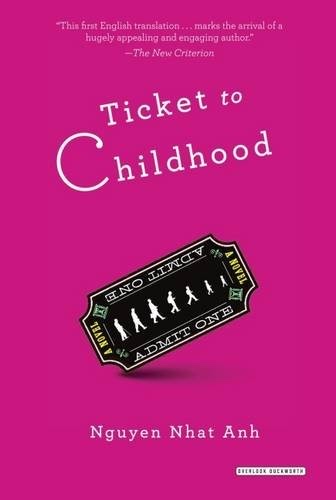
Cover of Ticket to Childhood

Ticket to Childhood

Nguyễn Nhật Ánh

4 ideas

  1. Four eight-year-olds rename the world

    An adult narrator recalls being eight in a Vietnamese neighborhood with his friends Hải cò, Tí sún and the girl Tủn. Finding life dull and adult rules arbitrary, the children agree among themselves to give everyday objects and animals new names and to hold mock trials that judge the grown-ups around them. The novella moves between these episodes and the middle-aged narrator's commentary on what he has since lost.

  2. Names are conventions children can revoke

    The children see that words attach to things only because people agree they do. By withdrawing that agreement and making their own, they turn language from something handed down by adults into something they own. A private vocabulary builds a closed community: shared names mark who belongs and make the familiar world strange enough to feel new again.

  3. Children as judges of adult conduct

    In the children's mock trials, the usual direction of judgment is reversed: adults, not children, are charged and weighed. From this angle, much adult authority looks like habit, hypocrisy or inconsistency rather than wisdom. Adults skip this scrutiny because they control who gets to judge whom.

  4. Adulthood loses a way of seeing

    The narrator argues that growing up does not erase childhood memories. What it erases is the habit of questioning and re-inventing a world that adults accept as fixed.

Save and mark ideas in the app