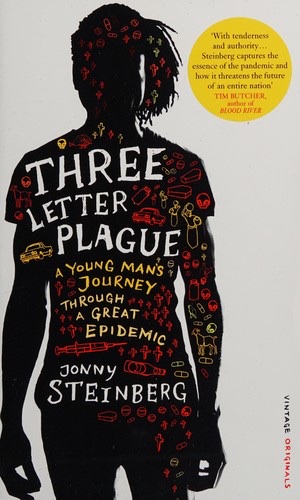
Cover of Three-Letter Plague

Three-Letter Plague

Jonny Steinberg

4 ideas

  1. Sizwe Magadla refuses the HIV test

    Sizwe Magadla, a young shopkeeper in his twenties and a friend of the treatment campaign, still would not take an HIV test. The book follows why a man with access to life-saving drugs, and no clear sign of illness, stayed away from the clinic.

  2. Free treatment does not make testing free

    Making antiretrovirals available removes the medical cost of a positive result but leaves its social cost intact. A diagnosis exposes a person's sexual past, invites blame over who infected whom, and marks someone who has done well as vulnerable to envy and suspicion. People can therefore rationally avoid testing even when treatment is free, because the test puts their standing in the community at risk, not their body.

  3. Nurse-led, decentralized treatment in scarcity

    Where doctors are too few, the Lusikisiki rollout moved antiretroviral prescribing and monitoring out of hospitals into rural clinics. Nurses did the prescribing, and lay counselors handled testing, adherence support and follow-up. Treatment capacity scaled because the work was redesigned around the staff who were actually present, not the staff who were missing.

  4. Medicine as a gift from outsiders

    A health intervention carries the history of whoever delivers it. When white foreign doctors bring life-saving pills to a Black rural community shaped by colonial and apartheid rule, recipients read the medicine as a statement about power, dependence and who defines their bodies. Their hesitation is partly a response to that relationship, not ignorance of the science.

Save and mark ideas in the app