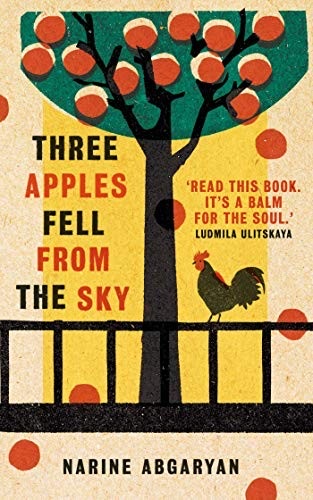
Cover of Three Apples Fell from the Sky

Three Apples Fell from the Sky

Narine Abgaryan (Armenia)

3 ideas

  1. Three apples for seer, teller, listener

    The Armenian folk-tale closing formula gives one apple to the one who saw, one to the one who told, and one to the one who listened. It treats a story as complete only when witnessing, narrating and hearing are all present, so the listener is a necessary participant with a share in the reward. In a dwindling community this three-part exchange is how memory of famine, war and loss is kept alive.

  2. Small communities survive through reciprocal daily care

    Maran is cut off from the valley and hollowed out by famine, war and natural disaster, yet it endures because its few remaining elderly residents treat one another's needs as their own business. Shared food, gossip, ritual and quiet intervention in private crises act as the infrastructure the outside world does not provide. Survival depends less on resources than on the density of these obligations.

  3. Expecting endings blinds us to beginnings

    People who have survived repeated catastrophe learn to read every change as a sign of loss, so they prepare for death when they are facing renewal. Anatolia's certainty that she is dying shows how accumulated grief shapes interpretation, turning an ambiguous signal into a verdict. Seen this way, part of recovery is learning to hold open the possibility that a disruption is a beginning.

Save and mark ideas in the app