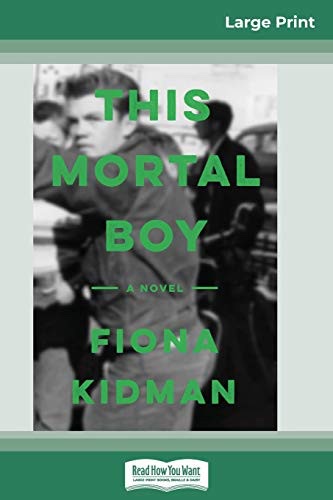
Cover of This Mortal Boy

This Mortal Boy

Fiona Kidman

4 ideas

  1. Albert Black's milk-bar killing and hanging

    Albert 'Paddy' Black, a 20-year-old Belfast immigrant who came to New Zealand in the early 1950s, stabbed 19-year-old Alan Jacques during a fight at Ye Olde Barn milk bar on Auckland's Queen Street in July 1955. Only one more person was executed in New Zealand after him, so he became a reference case in the country's abolition debate.

  2. Moral panic sets the sentence, not the act

    Black's fatal brawl happened soon after the 1954 Mazengarb Report had cast teenagers, milk bars and 'delinquency' as a national threat. A hot-blooded fight between two young men was therefore treated as a symbol of youth gone bad, and the state had a political motive to make an example of him. The severity of punishment tracks the anxieties of the moment more than the facts of the individual crime.

  3. The rootless outsider as ready-made villain

    His accent and background make him easy for a jury and public to read as dangerous and foreign. Look at who lacks advocates, and you can predict who the system will choose to make an example of.

  4. Diffused responsibility in state execution

    A hanging passes through many hands: police, prosecutors, jurors, judge, cabinet ministers deciding clemency in private, prison officers and the hangman. Each actor carries out only one bounded step, so no one feels they personally decided to kill. This spreading of the decision lets a lethal outcome move forward that few individuals would choose if the whole weight fell on them.

Save and mark ideas in the app