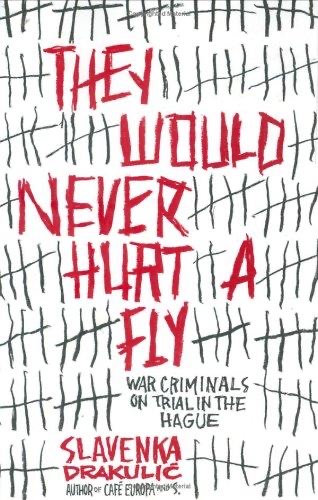
Cover of They Would Never Hurt a Fly

They Would Never Hurt a Fly

Slavenka Drakulić

5 ideas

  1. Erdemović's confession about the Branjevo farm

    Dražen Erdemović, a young soldier from a mixed Croat-Serb background, took part in executing about 1,200 Bosniak men at the Branjevo farm near Srebrenica in July 1995, and later estimated he personally shot around 70. He was the first defendant to plead guilty at the Hague tribunal and said he would have been killed alongside the victims if he had refused. His case, with its remorse, the duress defense, and the question of whether he could have refused, is the book's test of how far circumstance can excuse an individual who pulls the trigger.

  2. Perpetrators are ordinary, not monstrous

    The men on trial were described by neighbors, wives and friends as decent people who 'would never hurt a fly.' Their atrocities came from ordinary personalities placed in a context where killing had been normalized, not from some pathology visible in advance. Calling them monsters is a comfort, because it puts evil outside 'people like us' and excuses the society that produced and tolerated them.

  3. Manufactured fear turns neighbors into enemies

    Nationalist propaganda rewrote yesterday's neighbors as an existential threat, and that made fear the working motive for violence. Once people believe 'they will do it to us first,' killing feels like preemptive self-defense rather than aggression. When you look at an atrocity, look for the story of threat that made it seem necessary to the people who carried it out.

  4. Individual trials dissolve the myth of collective guilt

    Putting named individuals on trial for specific acts assigns guilt to persons rather than to whole nations. This matters because blaming an entire people feeds the cycle of revenge, while individual verdicts let a society separate itself from its criminals. The defendants resist this by casting themselves as representatives of their persecuted nation rather than as accountable individuals.

  5. Mladić and his daughter's suicide

    Ratko Mladić, the Bosnian Serb commander held responsible for Srebrenica and the siege of Sarajevo, lost his daughter Ana in 1994 when she killed herself with his own pistol, reportedly after learning of her father's crimes. He refused to accept it as suicide. The episode shows a man who could order mass killing while being devastated by a private loss he could not face, and it is the basis for portraying him as a tragic figure undone by his own acts.

Save and mark ideas in the app