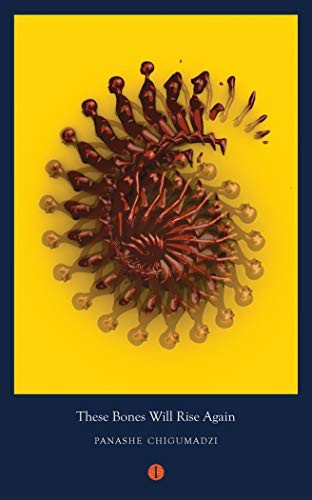
Cover of These Bones Will Rise Again

These Bones Will Rise Again

Panashe Chigumadzi

6 ideas

  1. Nehanda's prophecy as political resurrection myth

    The spirit medium Mbuya Nehanda, executed by colonial authorities after the 1896–97 uprising, is remembered as saying her bones would rise again. Each later struggle, from the liberation war to the 2017 coup, claims to be the fulfilment of that prophecy. The prophecy thus works as a reusable legitimating script that whoever holds power can invoke to present themselves as the ancestors' rightful heirs.

  2. Reading national history through one grandmother

    Placing an ordinary woman's life beside a coup shows what official chronologies leave out: displacement, labour, faith and waiting for land. Her life spans colonial rule, the war and independence, so it shows continuities that regime-changing events obscure. The intimate biography becomes a counter-archive to the story of great men.

  3. The coup reshuffled rather than ended power

    Crowds celebrated November 2017 as a liberation, but the military and ZANU-PF faction that removed Mugabe came from the same system that had sustained him. Euphoria at his fall hid the fact that the structures of patronage, securocracy and liberation-war entitlement stayed in place. What looked like a rupture was a transfer of power within the ruling party.

  4. Land as liberation's unfinished promise

    The war was fought to recover land taken under colonialism, yet ordinary rural families like the author's grandmother's still waited for restitution decades after independence. Mugabe's fast-track land reform answered a real grievance but distributed land through party patronage and did not deliver secure livelihoods to the people who had been dispossessed. The land question therefore stays open as the measure against which every government's legitimacy is judged.

  5. Ruling-party ownership of liberation memory

    The ruling party presents itself as the sole custodian of the liberation struggle, so questioning the government can be cast as betraying the war dead. The same monopoly on history erases other stories, such as the Gukurahundi massacres in Matabeleland and women's wartime roles. Recovering suppressed memories is therefore a political act, not just a historical correction.

  6. Diaspora daughter watching the homeland's revolution

    Raised largely in South Africa, the author watches the coup unfold from a distance and feels both the collective joy and her own outsider ambivalence. Her distance gives her some critical clarity, but it also leaves her unsure of her right to speak about a country she did not fully live in. The story shows how migrants inherit national history in fragments and piece it together through family.

Save and mark ideas in the app