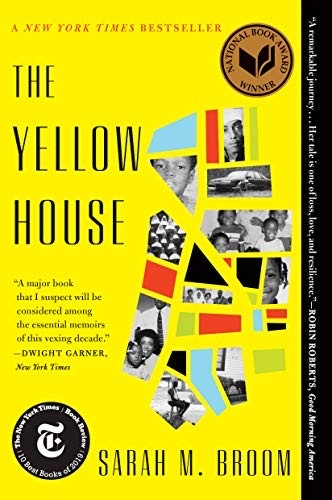
Cover of The Yellow House

The Yellow House

Sarah M. Broom

4 ideas

  1. The Yellow House on Wilson Avenue

    In 1961, at nineteen, Ivory Mae Broom bought a small shotgun house in New Orleans East, then marketed as a promising new frontier. Her husband Simon began renovations but died when Sarah, the youngest of twelve children, was an infant, and the house slowly decayed around the family for decades. Katrina flooded it in 2005, and the city demolished it afterward without the family present, leaving an empty lot that one brother, Carl, kept tending.

  2. Disaster completes slow neglect, not starts it

    A catastrophe like Katrina does not create a neighborhood's ruin; it finishes a process begun by decades of abandoned development promises, missing infrastructure, and withheld investment. What looks like sudden destruction is the visible last step of a slow, deniable disinvestment, and the storm makes legible damage that was already structural.

  3. The failing house as internalized shame

    When a family's house deteriorates beyond their means to fix, its condition becomes a private verdict on them rather than on the forces that let it decay. The Brooms rarely invited outsiders inside, so a material failure became a secret that shaped who they were. Seeing a dwelling this way shows how shelter shapes self-worth and how structural neglect gets borne as personal shame.

  4. Places left off the city's map

    A city can sustain a public, tourist-facing version of itself that omits whole neighborhoods, and those omitted places get less attention, investment, and recovery. New Orleans East sits outside the French Quarter story the city sells. Working in post-Katrina city government, Broom saw how absence from the official narrative translated into absence from civic priority.

Save and mark ideas in the app