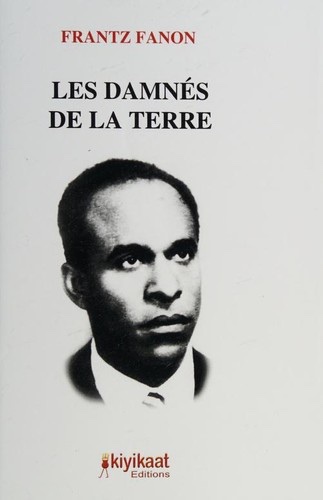
Cover of The Wretched of the Earth

The Wretched of the Earth

Frantz Fanon

6 ideas

  1. The torturer who wanted untroubled torture

    A European police inspector came to Fanon because he had begun beating his wife and children and could not sleep, attributing it to 'the events' and to long days of interrogations. He did not want to stop torturing. He wanted Fanon to help him continue torturing Algerians without the symptoms leaking into his home. The case shows perpetrators becoming psychiatric casualties of their own systematic violence, and psychiatry being asked to make that violence sustainable.

  2. Two boys who killed their friend

    Two Algerian boys, aged 13 and 14, killed a European classmate they described as a friend. They explained it as a reply to massacres of Algerians, saying they could not kill adults so they killed someone they could. Fanon presents the case to show that colonial war does not stay among combatants. Its logic of collective reprisal is absorbed by children and reproduced in intimate relationships.

  3. Colonial war as generator of mental disorder

    Fanon argues that many disorders he saw at Blida were reactive psychoses produced directly by the war and the colonial situation, not by individual constitution. Torture, massacre, and permanent humiliation create identifiable pathologies in victims, fighters, and torturers alike. Diagnosis therefore requires reading the political situation, and treating individuals without changing that situation leaves the cause intact.

  4. Pathologizing the colonized as colonial ideology

    The Algiers school of colonial psychiatry claimed that North Africans were constitutionally impulsive, criminal, and violent, and explained this through supposed brain underdevelopment. Fanon reads this 'science' as a justification that turns a reaction to domination into an innate trait of the dominated. He argues that the violence attributed to the colonized is the colonial order's own violence, returned and relabelled as their nature.

  5. The compartmentalized Manichaean colonial world

    The colony is a world cut in two: the settler town and the native town. The border between them is patrolled by the police and soldiers who are the colonized person's direct interlocutors. The division is also moral and zoological. The colonized is cast as the absence of values and described in animal terms. Because of this, decolonization cannot be a reform of the system and must be the abolition of the dividing line itself.

  6. The national bourgeoisie as colonial intermediary

    After independence, the national middle class tends to take over the colonizer's position rather than transform the economy. It acts as a commission agent for foreign capital and slides toward single-party rule and ethnic or regional division. National consciousness then becomes an empty shell unless political education and power are carried into the rural masses. Otherwise independence reproduces colonial structures under new faces.

Save and mark ideas in the app