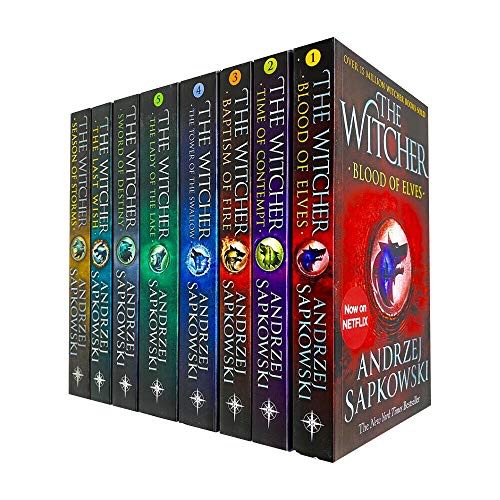
Cover of The Witcher

The Witcher

Andrzej Sapkowski

4 ideas

  1. The Thanedd coup and the elven scapegoat

    During the mages' conclave on the island of Thanedd in Time of Contempt, a faction of sorcerers allied with Nilfgaard attempts a coup. The Northern kings' agents are already primed to arrest the traitors, and the violence spills into a massacre.

  2. Neutrality as a luxury destroyed by events

    Geralt's professional code, that he kills monsters for pay and stays out of politics, is shown to be a position you can only hold while no one forces a choice on you. Once he loves specific people, Ciri and Yennefer, every refusal to take a side becomes a side in practice. The saga uses his repeated failure to stay neutral to argue that detachment is a privilege of having nothing at stake, not a moral stance.

  3. The real monsters are ordinary humans

    The monsters Geralt is hired to kill are often less dangerous or less guilty than the people who hire him. The saga locates the worst cruelty in mobs, bureaucrats, soldiers and kings acting from fear, greed or raison d'état, who carry out pogroms and massacres with full social approval. Monstrosity is therefore defined by conduct and permission, not by species or appearance.

  4. Destiny as a demand others enforce

    Ciri's destiny, from the Law of Surprise to her Elder Blood, works less as a cosmic plan than as a claim that kings, sorcerers, emperors and elves each try to collect by capturing her body and her bloodline. Prophecy turns a person into a strategic asset, and the people who believe in her fate use it to justify owning her. The saga resolves this by letting Ciri treat her destiny as something she can choose to walk away from, not something she must fulfil.

Save and mark ideas in the app