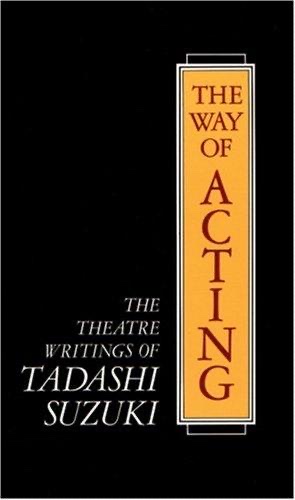
Cover of The Way of Acting

The Way of Acting

Tadashi Suzuki

5 ideas

  1. Mechanical energy has dismembered the actor's body

    Suzuki argues that modern theater has replaced the performer's 'animal energy' (physical power generated by the body itself) with 'non-animal energy' such as electric lighting, amplification and stage machinery. As these technologies take over the work of projecting presence, the actor's own faculties of voice, breath and bodily expression weaken and fragment. Recovering theater therefore means restoring the body as the primary source of theatrical energy.

  2. The feet as the actor's grammar

    Suzuki treats the feet and their relationship to the ground as the foundation of all expressive acting, the basic grammar from which gesture and voice are built. His training has actors stamp rhythmically, shift weight and walk in controlled ways so they become aware of the lower body's contact with the floor. Stability and control in the lower body are what let the upper body and voice carry intensity without collapsing.

  3. Stamping as communion with the ground

    Drawing on Noh and Kabuki, where the performer's stamps sound against a resonant wooden floor, Suzuki reads the act of stamping as more than rhythm. It is a ritual gesture that summons and confirms a relationship between the body and the earth, and it can be traced to older agricultural and religious practices. Viewed this way, how a performer meets the floor reveals whether a theater tradition roots the body in place or floats it above the stage.

  4. Tradition is valuable as bodily discipline

    Suzuki does not try to revive Noh and Kabuki as museum forms, and he does not simply adopt Western realism. He extracts the physical disciplines embedded in traditional Japanese performance, including centered breath, a low center of gravity and controlled stillness, and applies them to any text, including Greek tragedy and Shakespeare. On this view, what a culture transmits most durably is a trained body, not a repertoire.

  5. Relocating the company to mountain Toga

    In 1976 Suzuki moved his Waseda Shogekijo company out of Tokyo to Toga, a remote mountain village in Toyama Prefecture. There he converted a traditional gassho-zukuri thatched farmhouse into a theater and later built an international theater festival and training center.

Save and mark ideas in the app