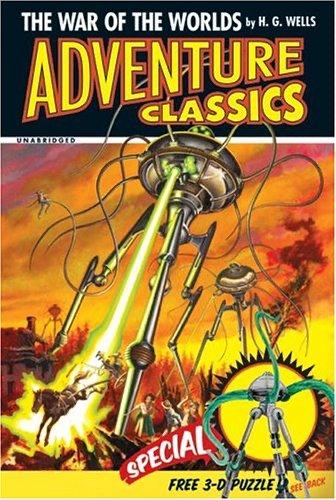
Cover of The War of the Worlds

The War of the Worlds

H. G. Wells

4 ideas

  1. Imperial conquest reversed onto the conqueror

    The narrator asks readers not to judge the Martians too harshly, since Europeans had themselves wiped out the Tasmanians and destroyed the bison and the dodo in a war of extermination. Casting the English as the colonized forces a dominant culture to experience its own methods from the receiving end. What seemed like civilization's progress from the inside appears as extermination from the outside.

  2. Martians felled by earthly bacteria

    Martian cylinders land near Woking in Surrey. The Martians use tripod fighting-machines, a Heat-Ray and poisonous Black Smoke to crush the British army and empty London. Then they suddenly die, killed by terrestrial bacteria their bodies had no defence against, and the narrator finds them silent and rotting on Primrose Hill.

  3. Immunity is earned through evolutionary cost

    Humans survive microbes because countless ancestors died of them, leaving a population selected for resistance. The Martians, from a world without such germs, had superior weapons but no evolved immunity, and they fell to the smallest organisms on Earth. Belonging to an environment is paid for in deaths across generations, and technology cannot buy that adaptation.

  4. Complacency as the blind spot of dominance

    The book opens with humanity going about its business, 'serene in their assurance of their empire over matter', while minds on Mars study it the way a person studies creatures in a drop of water. The confidence of being at the top of a hierarchy stops the powerful from imagining a stronger observer. That is why the first cylinder draws curious crowds rather than alarm.

Save and mark ideas in the app