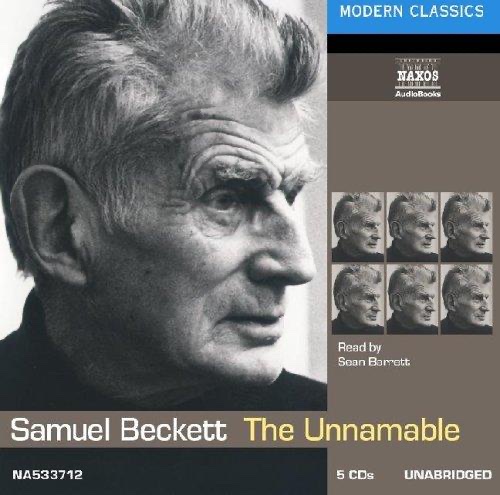
Cover of The Unnamable

The Unnamable

Samuel Beckett

6 ideas

  1. Speech is compelled, not chosen

    The voice speaks not because it has something to say but because it cannot stop; the obligation to talk precedes any content or speaker. Discourse here is a pensum imposed from outside, a task whose terms are unknown, so speaking becomes labor without a known assignment or a way to finish it.

  2. The vicarious self through invented surrogates

    The speaker invents figures (Mahood, Worm, earlier Molloy and Malone) to talk through, hoping one will carry the burden of being 'I'. Each surrogate collapses because the voice cannot fully identify with it, which exposes that the self may be nothing but a string of delegated fictions.

  3. Silence is reachable only by speaking

    The voice believes it can earn silence only by finally saying the right thing, perhaps its own true story. Since that thing can never be located, the only road to silence is more speech, and the goal generates the very noise that blocks it.

  4. Language as belonging to others

    The words the voice uses were taught by unnamed 'they', a 'college of tyrants', so every sentence speaks their language, not its own. Read this way, self-expression is always ventriloquism, and the struggle to say 'I' is a struggle against borrowed vocabulary.

  5. Assertion followed by immediate retraction

    The text moves by aporia: it asserts, then negates or qualifies ('affirmations and negations invalidated as uttered'). This method strips away every stable claim, so the only thing left standing is the process of utterance itself, not any conclusion.

  6. Persistence without reason or hope

    The closing 'I can't go on, I'll go on' holds impossibility and continuation in one breath without resolving them. Going on is justified by nothing: no meaning, goal, or self to preserve. It is simply what happens when stopping is also impossible.

Save and mark ideas in the app